Dark Threat Intelligence: Detecting Hidden Cyber Threats Before They Strike
The Visibility Gap in Modern Security
Traditional threat intelligence relies on indicators of compromise (IOCs) — file hashes, domain names, IP addresses — that have already been used in an attack. By the time these IOCs appear in your SIEM or firewall feeds, the adversary has likely already compromised your environment or is actively targeting you. This reactive model fails to address the most critical question: what threats are being planned against us right now, in spaces we never monitor?
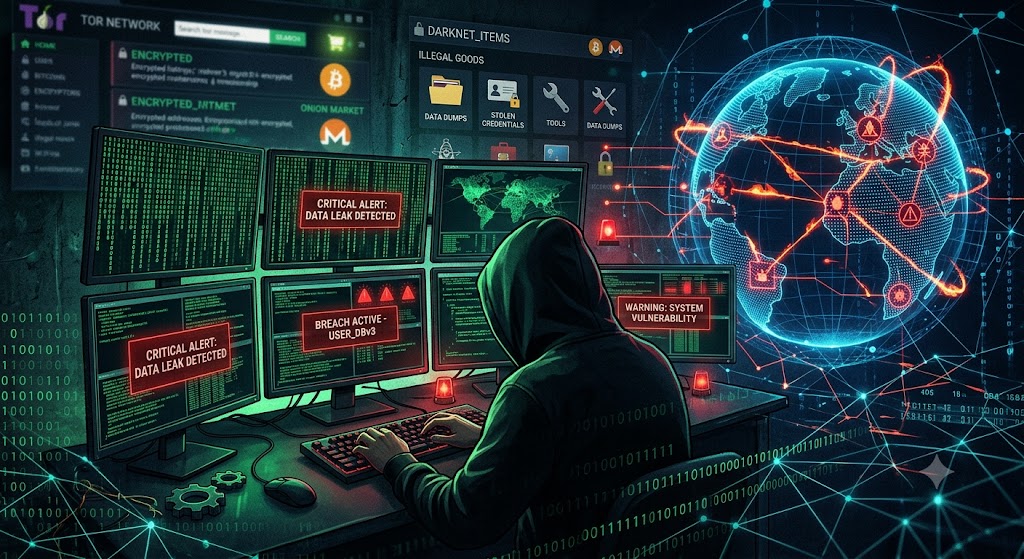
Dark threat intelligence (DTI) bridges this gap by collecting and analyzing signals from the hidden corners of the internet: dark web marketplaces, encrypted messaging platforms, private forums, paste sites, and other ephemeral communication channels where adversaries recruit, trade tools, and coordinate operations. Unlike broad cyber threat intelligence feeds that aggregate known-bad infrastructure, DTI focuses on intent and capability — identifying when threat actors discuss targeting your industry, your technology stack, or even your organization by name.
Understanding the Dark Threat Landscape
The dark web is not a monolith. It comprises several distinct layers of activity, each requiring different collection and analysis approaches:
- Dark Web Marketplaces: Structured commerce platforms where ransomware operators, initial access brokers, and malware distributors sell services. These sites often use escrow systems and rating mechanisms similar to legitimate e-commerce.
- Encrypted Forums: Private communities on platforms like Telegram, Discord, and specialized dark web forums where actors discuss tactics, share tools, and coordinate campaigns.
- Paste Sites and Leak Sites: Ephemeral platforms where credentials, database dumps, and sensitive documents are published, often as proof-of-concept for sales or as warnings to victims.
- Code Repositories and Development Forums: Where new exploit code, malware frameworks, and attack tooling are developed and shared.
Each of these channels requires different technical approaches to monitor. Dark web marketplaces demand Tor network access and specialized scraping tools. Encrypted forums require membership vetting and language analysis capabilities. Paste sites need continuous monitoring for keyword matches and pattern recognition.
Building Collection Capabilities
Effective dark threat intelligence starts with disciplined collection. Here's how to structure your approach:
Infrastructure Setup
Establish a secure, isolated environment for dark web access. Use dedicated virtual machines or containers with no connection to your production network. Route all dark web traffic through Tor using the Tor Browser or custom configurations with torsocks. Never access dark web resources from corporate endpoints or networks.
# Example: Isolated collection environment
# Use a dedicated VM with host-only networking
docker run -d --name dark-collector \
  --network=none \
  -v /opt/dark-data:/data \
  ubuntu:22.04

# Route traffic through Tor
ssh -D 9050 user@tor-gateway
Target Identification
Don't attempt to monitor everything. Start with focused target lists based on your organization's risk profile:
- Industry-specific threat actor groups
- Technology stack components (specific software, hardware, cloud providers)
- Geographic regions of business operations
- High-value personnel and executive targets
- Competitor and supply chain organizations
Maintain these target lists in a structured format that can be integrated into automated collection pipelines.
Automated Monitoring Tools
Deploy a combination of open-source and commercial tools to scale your collection efforts:
- OnionSearch: Scrapes dark web marketplaces for listings matching specific keywords
- Tegrine: Monitors Telegram channels and groups for threat indicators
- Censys/Shodan: Identify exposed infrastructure that adversaries might target
- Custom scrapers: Built for specific forums or platforms where public tools don't exist
# Example: Simple marketplace monitoring script
import requests
from stem import Signal, Controller

def rotate_tor_identity():
    with Controller.from_port(port=9051) as controller:
        controller.authenticate(password="tor-password")
        controller.signal(Signal.NEWNYM)

def search_marketplace(keywords):
# Implementation depends on specific marketplace structure
    pass
Analyzing and Triage Framework
Raw dark web data is noisy. Most posts are irrelevant, outdated, or fraudulent. Your analysis process must quickly identify genuine threats while filtering noise.
Structured Analysis Process
Implement a triage framework similar to incident response:
- Initial Screening: Filter by relevance to your target lists. Automatically discard posts that don't mention your organization, industry, or technology by name.
- Credibility Assessment: Evaluate the source's reputation, posting history, and community standing. Established actors with positive ratings are more credible than new accounts.
- Contextual Enrichment: Cross-reference findings with internal data — recent security incidents, known vulnerabilities, or ongoing projects that might make your organization a target.
- Risk Scoring: Assign quantitative risk scores based on multiple factors including actor sophistication, stated timeline, and potential impact.
Common Dark Web Indicators
Look for specific patterns that indicate active targeting:
- Reconnaissance discussions: Posts asking for information about specific organizations or technologies
- Tool development: New exploit code or malware variants being discussed or sold
- Service offerings: Initial access brokers advertising access to networks in your sector
- Vulnerability chatter: Discussions of zero-day exploits or unpatched vulnerabilities in your tech stack
- Social engineering campaigns: Information about key personnel or internal processes being shared
Integrating DTI with Security Operations
Dark threat intelligence is only valuable if it drives action. Integrate DTI findings directly into your existing security operations:
Threat Hunting Integration
Feed dark web findings into your threat hunting program. When you identify a discussion about exploiting a specific vulnerability in your environment, immediately launch a hunt for evidence of that vulnerability being actively exploited.
-- Example: Hunt query for CVE exploitation
SELECT * FROM endpoint_events
WHERE process_cmdline LIKE '%<vulnerable_software>%'
  AND timestamp > '<dark_web_discussion_date>'
  AND event_type = 'process_creation'
Incident Response Preparation
Use DTI to prepare for likely attack scenarios. If you discover discussions about ransomware attacks targeting your industry, validate your backup procedures, test incident response playbooks, and brief leadership on expected impact.
Vulnerability Management Prioritization
When dark web sources mention exploits for vulnerabilities in your technology stack, elevate those patches to emergency priority status, even if the official CVSS score seems moderate.
Challenges and Limitations
Dark threat intelligence faces several significant challenges that practitioners must acknowledge:
Data Quality and False Positives
Much dark web content is intentionally misleading. Fraudsters post fake credentials, non-existent exploits, and false vulnerability claims to scam other criminals. Your analysis must account for this adversarial environment.
Legal and Ethical Considerations
Operating in dark web spaces carries legal risks. While monitoring public forums and marketplaces is generally legal, some activities may cross jurisdictional boundaries. Consult legal counsel before establishing collection operations, and always operate within applicable laws.
Resource Intensity
Effective DTI requires significant human expertise for analysis and interpretation. Automated tools can collect data, but experienced analysts are needed to assess credibility, understand context, and prioritize findings.
Attribution Difficulties
Dark web personas are pseudonymous by design. Linking online identities to real-world threat actor groups requires extensive correlation and often remains inconclusive.
Measuring DTI Program Effectiveness
Demonstrating the value of dark threat intelligence can be challenging because success is often measured by incidents that didn't happen. Track these metrics:
- Lead Time: Average time between dark web threat detection and potential impact window
- Prevention Rate: Percentage of identified threats that were successfully mitigated before causing harm
- False Positive Rate: Ratio of investigated threats that proved non-actionable
- Hunting Efficiency: Reduction in mean time to detect in related threat hunting operations
- Patch Prioritization: Number of critical patches deployed based on DTI findings
Getting Started Checklist
Organizations looking to establish dark threat intelligence capabilities should follow this phased approach:
- Define Scope: Start with 3-5 specific target categories rather than attempting broad monitoring
- Establish Safe Infrastructure: Set up isolated collection environments with proper security controls
- Build Analyst Team: Train existing security staff on dark web analysis methodologies
- Deploy Initial Tools: Begin with open-source tools and free data sources
- Create Integration Points: Connect DTI findings to existing SOAR, SIEM, and ticketing systems
- Develop Playbooks: Create specific response procedures for common threat categories
- Measure and Iterate: Continuously refine collection and analysis based on results
Conclusion
Dark threat intelligence represents a fundamental shift from reactive to proactive security. By monitoring the spaces where adversaries plan and coordinate, organizations can gain crucial time to prepare for and prevent attacks. However, DTI is not a magic bullet — it requires significant investment in tools, processes, and skilled personnel.
The most successful DTI programs blend automated collection with expert human analysis, integrate findings directly into operational security workflows, and maintain realistic expectations about what dark web monitoring can and cannot achieve. Start small, focus on your highest-priority threats, and scale systematically as you build capability and demonstrate value.
In an era where attack tools are commoditized and threat actors operate with increasing sophistication, the ability to see around corners — to detect threats before they materialize into actual attacks — may be the decisive advantage that separates resilient organizations from those left vulnerable to the next major breach.
The dark web is where tomorrow's attacks are planned today. The question isn't whether your organization appears in these hidden spaces — it's whether you'll discover it there before your adversaries do.